What Is a Comma Splice? Meaning, Examples and Fixes
A practical guide to spotting two independent clauses joined by one comma, choosing the right repair, and keeping the original meaning clear.

What is a comma splice?
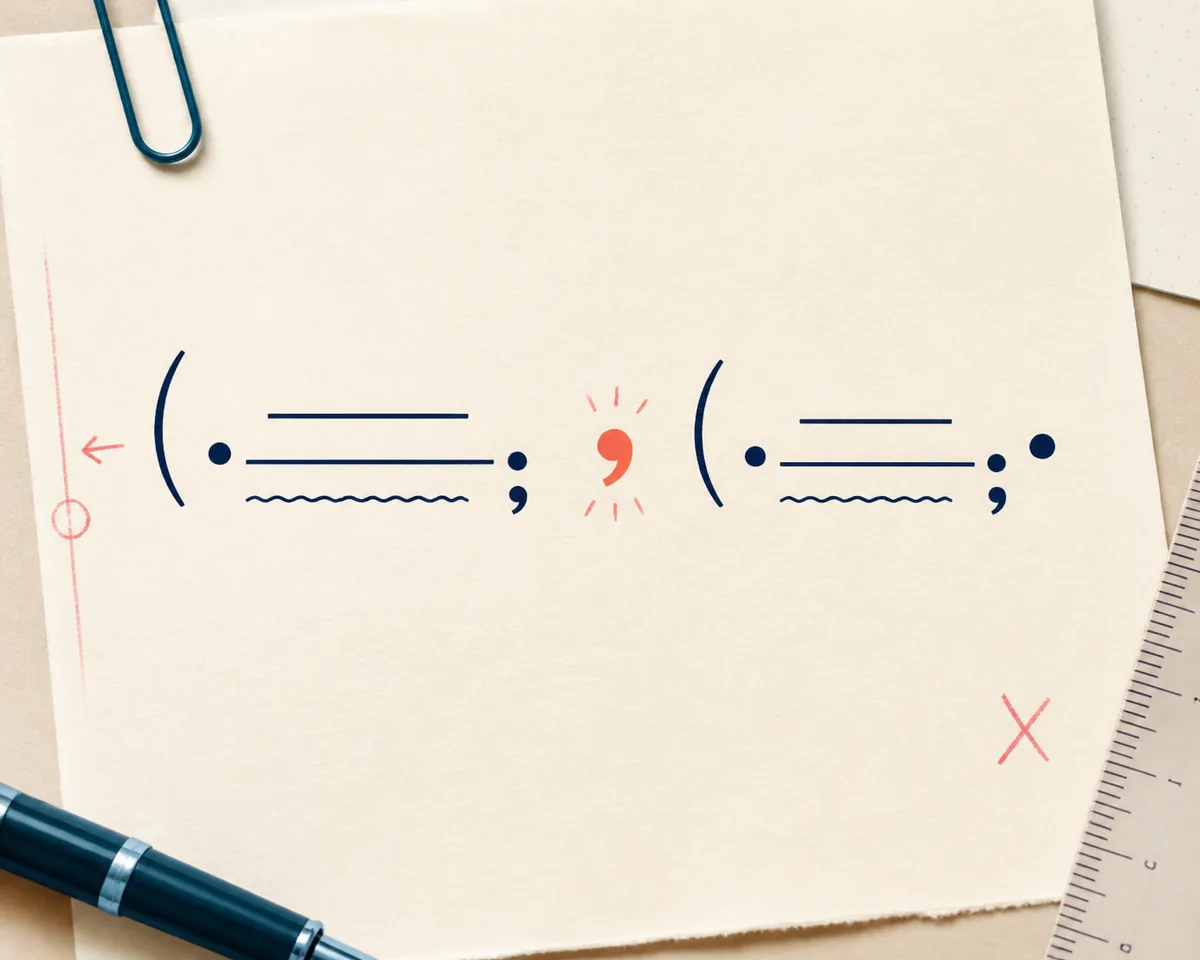
A comma splice occurs when two independent clauses are connected with only a comma. An independent clause has its own subject and verb and can stand as a complete sentence, so the comma alone does not show the relationship clearly enough.
For example, The draft is ready, it still needs sources contains two complete thoughts. The first clause can stand alone as The draft is ready. The second can stand alone as It still needs sources. Because both sides are independent, the comma needs help.
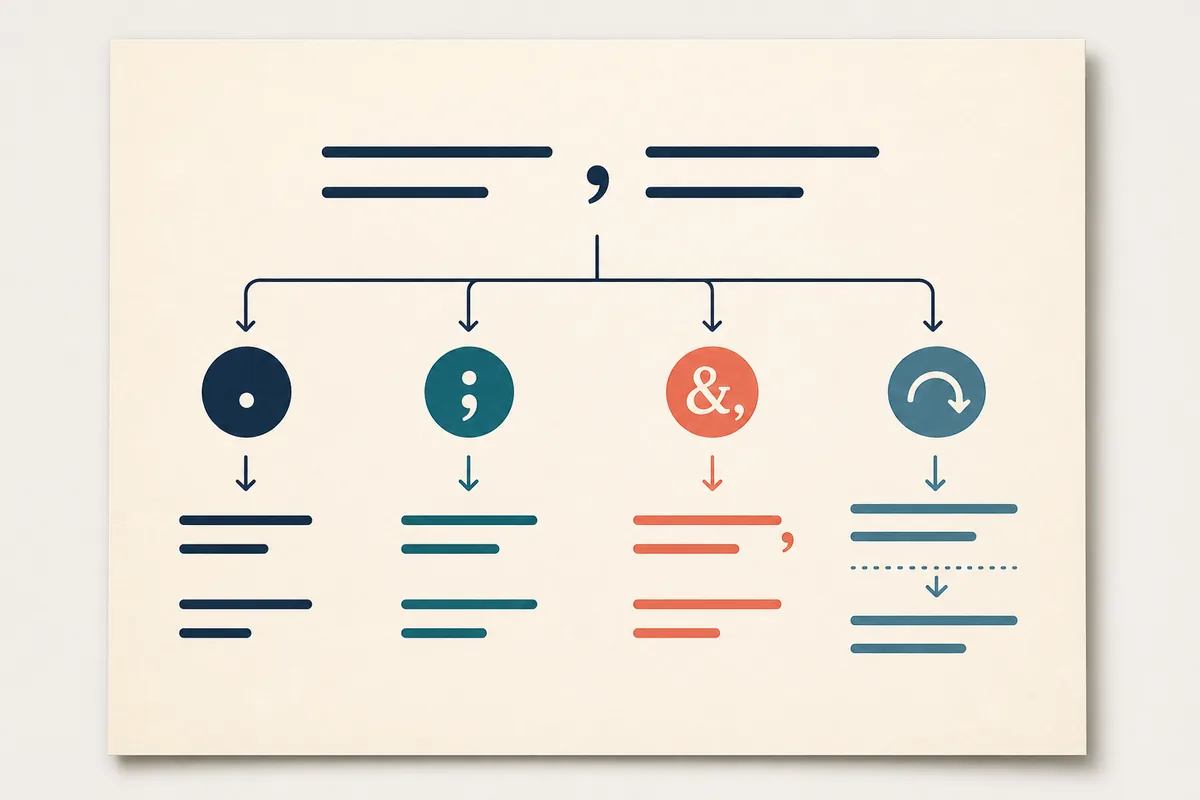
The best correction depends on the relationship between the ideas. A period creates a clean break, a semicolon keeps closely related ideas together, a conjunction makes the relationship explicit, and a rewrite may make the sentence shorter or more natural.
| Sentence | What is wrong | Possible direction |
|---|---|---|
| The draft is ready, it still needs sources. | Two independent clauses use only a comma. | Use a period, semicolon, conjunction, or rewrite. |
| The draft is ready, but it still needs sources. | The conjunction but supplies the missing connection. | Keep it when contrast is the intended meaning. |
| The draft is ready; it still needs sources. | A semicolon joins closely related independent clauses. | Use it when the ideas belong together. |
| The draft is ready. It still needs sources. | The period makes two complete sentences. | Choose it when clarity matters more than connection. |
The quickest test
Read the words before and after the comma as separate sentences. If both sides can stand alone, check whether you need a stronger boundary or a connecting word.
How to recognize a comma splice
The most reliable way to recognize a comma splice is to test the clauses, not to judge the sentence by length. A short sentence can contain a comma splice, and a long sentence can be correct if its clauses are connected properly.
- 1. Find the comma Look for a comma that seems to separate two complete thoughts. Ignore commas inside a list or after an introductory phrase for this first check.
- 2. Test the left side Ask whether the words before the comma contain a subject and a complete verb. If they do, they may form an independent clause.
- 3. Test the right side Ask the same question after the comma. If the second side can also stand alone, the comma may be too weak.
- 4. Check the relationship Decide whether the ideas show contrast, cause, sequence, addition, or simply two separate facts. That meaning will guide the fix.
Watch for words that look like connectors but do not solve the problem by themselves. However, therefore, and nevertheless are often transitional adverbs, not coordinating conjunctions. They may need a period or semicolon before them and a comma after them: The report is ready; however, the appendix needs one more source.
A comma is also correct when the material after it is not an independent clause. In The report is ready, but not complete, the phrase after the comma does not have its own complete subject-verb structure, so it is not the same pattern.
Four reliable ways to fix a comma splice
There is no single best correction for every comma splice. Start with the meaning you want the reader to hear, then choose the smallest change that makes the sentence grammatically clear.
1. Use a period
A period is the safest choice when the two thoughts deserve equal attention or when a shorter sentence will be easier to read. It creates two independent sentences without adding a relationship that the writer did not intend.
- The meeting ended early. We still had three decisions to make.
- Use this option when the ideas are related but do not need to be tightly joined.
2. Use a semicolon
A semicolon keeps two closely related independent clauses in one sentence. It works well when the second thought explains, contrasts with, or continues the first without needing a specific conjunction.
- The meeting ended early; we still had three decisions to make.
- Do not use a semicolon if the two clauses are not closely connected.
3. Add a coordinating conjunction
Use and, but, so, or, nor, for, or yet when the relationship needs to be explicit. But signals contrast, so signals a result, and signals addition, while or presents an alternative.
- The meeting ended early, but we still had three decisions to make.
- The report is ready, so we can send it after the final review.
4. Rewrite the sentence
A rewrite can remove repetition, change one clause into a dependent clause, or make the cause-and-effect relationship clearer. This is often the best option when a period, semicolon, or conjunction would sound mechanical.
- Because the meeting ended early, we had time to make three decisions.
- After the early meeting, we still had three decisions to make.
Choose by meaning, not by habit
If you always replace a comma splice with a semicolon, you may preserve the grammar but lose the intended relationship. Contrast, cause, sequence, and emphasis each suggest a different repair.
Comma splice vs. other sentence errors
Comma splices are one kind of run-on sentence, but not every sentence-boundary problem uses a comma. Naming the pattern helps you choose the right correction and explain it to a student, colleague, or reader.
If you want a focused check on a sentence or paragraph, use the Comma Splice Checker to compare period, semicolon, conjunction, and rewrite suggestions. A general sentence or punctuation review is useful when the problem may be broader than one comma join.
| Pattern | Example | Typical repair |
|---|---|---|
| Comma splice | The draft is ready, it needs sources. | Period, semicolon, conjunction, or rewrite. |
| Fused sentence | The draft is ready it needs sources. | Add punctuation or a connector. |
| Run-on sentence | A broad label for a sentence-boundary problem. | Identify the exact pattern, then repair it. |
| Fragment | Although the draft is ready. | Complete the dependent clause or attach it to a main clause. |
Need to check a real sentence? Try the free comma splice checkerafter you understand the pattern.
Comma splice examples and corrections
Use these examples to compare the grammar with the intended meaning. The correction is not just a punctuation swap; it should tell the reader how the two ideas fit together.
When you revise your own work, read the corrected sentence aloud. If the connection feels too strong, use a period. If it feels too loose, keep the clauses together with a semicolon or a precise conjunction.
| Comma splice | Clear correction | Why it works |
|---|---|---|
| I reviewed the paragraph, the comma between the clauses is not enough. | I reviewed the paragraph; the comma between the clauses is not enough. | The semicolon joins closely related thoughts. |
| She wanted a shorter sentence, it was easier to read. | She wanted a shorter sentence because it was easier to read. | Because shows the reason for the choice. |
| The report is ready, however the appendix needs one more source. | The report is ready. However, the appendix needs one more source. | A transition such as however needs a proper sentence boundary. |
| The results are useful, they are not final. | The results are useful, but they are not final. | But makes the contrast explicit. |
| The draft is nearly done, we can finish the citations tomorrow. | The draft is nearly done. We can finish the citations tomorrow. | The period gives each statement a clear focus. |
A final review checklist
A grammar tool can flag a likely comma splice, but the writer still decides which correction preserves the meaning. Use this short checklist before submitting an essay, sending an email, or publishing a paragraph.
- Underline the subject and verb on both sides of the comma.
- Read each side separately to confirm whether both clauses can stand alone.
- Name the relationship: contrast, cause, result, sequence, addition, or separate facts.
- Choose a period, semicolon, conjunction, or rewrite that matches that relationship.
- Read the corrected version again for rhythm, emphasis, and accidental changes in meaning.
- Run a final spelling, grammar, and punctuation pass after sentence-boundary edits.
Bottom line
A comma splice is easy to recognize once you test both sides as complete clauses. The strongest fix is the one that makes the sentence correct while making the relationship between the ideas easier to understand.
Comma splice FAQ
What is a comma splice in simple terms?
It is two complete sentences joined with only a comma. Because both clauses can stand alone, the comma needs a stronger boundary or a connecting word.
Is a comma splice always wrong?
In standard formal English, joining two independent clauses with only a comma is normally treated as an error. Some creative writing may use unconventional punctuation deliberately, but that is a style choice rather than the standard rule.
What is the easiest way to fix a comma splice?
Use a period if you want the clearest, lowest-risk correction. Use a semicolon, a coordinating conjunction, or a rewrite when the relationship between the ideas matters.
Can I use however after a comma?
Usually not when however is acting as a transition between two independent clauses. Use a period or semicolon before however and a comma after it: The report is ready; however, the appendix needs another source.
What is the difference between a comma splice and a fused sentence?
Both join independent clauses incorrectly. A comma splice uses a comma between them; a fused sentence has no punctuation or connector at all.
Should I use a semicolon for every comma splice?
No. A semicolon is useful for closely related ideas, but a period may be clearer and a conjunction or rewrite may communicate contrast or cause more precisely.